Cook 6 min read
How to Sear Steak in Cast Iron (Start to Finish)
A dry steak and a properly preheated pan do most of the work. The full method: salt timing, the water-drop test, flip cadence, butter baste, rest, aftercare.
This guide has product links. As an Amazon Associate, Seasoned Cast earns from qualifying purchases — it never changes what we recommend.
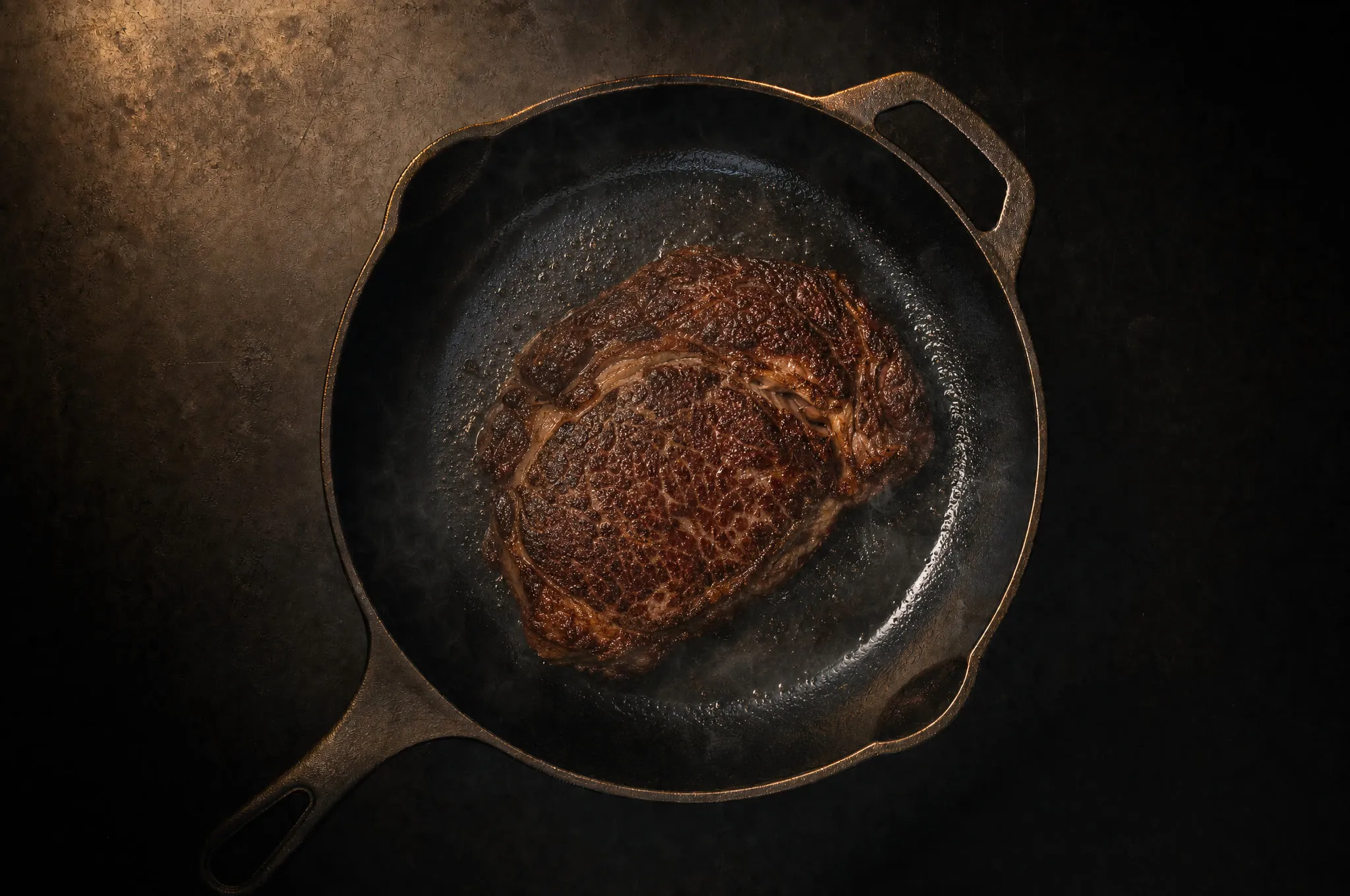
A great sear is a dry, thick steak laid into a pan you preheated for minutes, not moments. Pat the steak dry, salt it right before cooking or 45-plus minutes ahead, heat the pan on medium-high until a drop of water skitters across it, add a thin film of high-smoke-point oil, and don’t touch the steak for the first two to three minutes.
That’s the skeleton. The details below are where steaks go gray or go right. Nothing else in a home kitchen holds heat against a cold slab of beef the way cast iron does — this is the pan’s signature move, and the rest of the Cook section leans on the same heat instincts.
Start with a thick steak
An inch and a quarter minimum; an inch and a half is better. Ribeye, strip, and sirloin all sear well. A thin steak is a timing trap — by the time the crust is worth eating, the middle is past done. Thickness buys time: a fat steak can sit against hot iron long enough to build real crust while the center strolls toward medium-rare.
Dry means actually dry
Crust is browning, and browning can’t start until the surface water is gone. A wet steak spends the pan’s heat boiling water instead of browning beef. Pat it down hard with paper towels — both sides, then the edges.
Planning ahead? Do one better: set the steak on a rack over a plate and park it in the fridge, uncovered, for a few hours or overnight. Fridge air is dry; it pulls surface moisture until the steak feels tacky-dry — exactly what a sear wants. Optional, and the cheapest crust upgrade there is.
Salt right before, or 45 minutes ahead — never in between
Salt pulls water. In the first minutes after salting, that water beads on the surface — the surface you just dried. Wait long enough, 45 minutes or more, and the beads dissolve the salt and get pulled back into the meat, seasoning it deeper and leaving the outside dry again.
That leaves two good windows: right before the pan, before moisture can surface — or 45-plus minutes ahead, after it has come and gone. Between them is the bad zone: a steak actively sweating at the moment you need it dry. We salt the night before when the steak is drying in the fridge anyway, and at the pan when we didn’t plan. Be generous; a thick steak takes more salt than looks reasonable.
Preheat like you mean it
Here is cast iron’s whole advantage: it heats slowly but holds enormously. A thin pan drops its temperature the instant a cold steak lands. Cast iron shrugs and keeps searing. The preheat is how you charge that reservoir.
Set the pan on medium-high and give it four to five minutes. Then test instead of guessing: flick in a few drops of water. If they flatten and sizzle away, keep waiting. When they bead up and skitter around the pan like marbles — riding a cushion of their own steam, which only happens on properly hot metal — the pan is ready.
The sear itself
Now the oil — not earlier, or it breaks down while you wait. A thin film of something with a high smoke point: avocado, grapeseed, or canola. A teaspoon or two, swirled to coat. It will shimmer and throw a first wisp of smoke almost immediately; at searing heat, that’s a green light, not an alarm. Butter is not the searing fat — its milk solids burn far below crust temperature. It comes in later.
Lay the steak in away from you and leave it alone. It will grip the pan at first; that’s crust forming, not sticking gone wrong. When the crust sets, it releases on its own. Give it two to three minutes, nudge with tongs, and if it fights you, give it thirty more seconds.
On flipping, two honest schools. Flip once: a full sear per side, simple, classic. Flip every minute: a more even interior, less gray band under the crust. Both work — anyone who says one ruins steak is selling something. We flip once around an inch and a quarter, and minute-flip anything thicker. Somewhere in there, stand the steak on its fat edge with tongs for a minute; rendered fat cap is the best bite on a strip steak.
The baste (optional, worth it)
In the last two minutes, drop in a couple tablespoons of butter, a smashed garlic clove, and a sprig or two of thyme. Tilt the pan so the butter pools, and spoon it over the steak again and again. The foaming butter carries garlic and thyme into the crust, and because it arrives at the end, it flavors instead of burning. Skip it and you still have a great steak — it’s a finish, not a foundation.
Doneness: numbers, not vibes
The finger-poke test is real, but it’s a skill you calibrate against a thermometer anyway. Skip to the answer: probe through the side of the steak into the center and read it. Pull below your target — a thick steak off hot iron keeps climbing several degrees while it rests.
| Doneness | Pull at | After resting |
|---|---|---|
| Rare | 115–120°F | 120–125°F |
| Medium-rare | 125–130°F | 130–135°F |
| Medium | 135–140°F | 140–145°F |
| Medium-well | 145–150°F | 150–155°F |
For the record: the USDA’s number for whole cuts is 145°F with a three-minute rest, which lands at medium. Most steakhouses serve cooler. Know the guidance, then cook to your own comfort.
Rest it
Five to ten minutes on a rack or a warm plate. Cut immediately and the juice ends up on the board; give it the rest and it stays in the meat, while the carryover coasts the center up to target. Slice against the grain.
About the smoke
A proper sear smokes. You’re deliberately holding oil near its smoke point — that’s the price of crust. Run the hood on high, crack a window, close the bedroom doors, and carry on. Plan for it instead of being surprised by it.
What a sear doesn’t explain is a pan that smokes on ordinary medium-heat nights, before any oil goes in. That’s residue or old seasoning burning off — a different problem with its own fixes.
Aftercare: the pan earned 60 seconds
The browned drippings welded to the pan — the fond — come off easily exactly once: while the pan is warm. Let it come down from screaming-hot first (cast iron doesn’t love a cold-water shock), then add a splash of water and scrape the fond loose with a wooden spatula. Better yet, scrape it into a pan sauce.
Then the usual routine: wash it — soap is fine, and yes, we’re sure — dry it on a burner until bone dry, wipe in two or three drops of oil, and buff until it looks dry again.
One honest note: hard sears are hard on seasoning. A few steak nights can leave dull gray patches where the heat ran hottest. That’s cosmetic — cooking re-darkens it. If the surface goes properly patchy, give it a refresh coat in the oven and it comes back better than before.
That’s the whole move: dry steak, honest salt window, real preheat, oil that can take the heat, patience through the first minutes, a thermometer, a rest. Cast iron doesn’t make searing complicated. It just refuses to cover for skipped steps.
FAQ
Do I need to let the steak come to room temperature first?
No. A half hour on the counter barely moves the center temperature of a thick steak, and a cooler center actually buys you more searing time before the middle overshoots. Spend that effort on drying the surface and preheating the pan instead — both matter far more.
What's the best oil for searing steak in cast iron?
Any neutral oil with a high smoke point: avocado, grapeseed, or canola. Skip butter and extra-virgin olive oil for the sear itself — both burn at crust temperature. Butter earns its place in the last two minutes as a baste, after the hard searing is done.
Why did my steak turn gray instead of brown?
A wet surface, a half-preheated pan, or a crowded one. Browning can't start until the surface water has boiled off, and every shortcut either adds water or steals heat. Pat the steak truly dry, preheat until a water drop skitters across the pan, and give a 12-inch skillet no more than two steaks at a time.
Can I finish a thick steak in the oven?
Yes. Sear both sides hard on the stovetop, then slide the whole pan into a 350°F oven and pull the steak a few degrees under your target temperature. Remember the handle comes out oven-hot — keep a dry towel folded over it until the pan is back on the stove and cool.