Care 6 min read
How to Store Cast Iron Pans (Dry, Oiled, and Breathing)
Cast iron storage comes down to three things: bone dry, a thin buffed coat of oil, and moving air. Where to put pans, how to stack them, and the lid rule.
This guide has product links. As an Amazon Associate, Seasoned Cast earns from qualifying purchases — it never changes what we recommend.
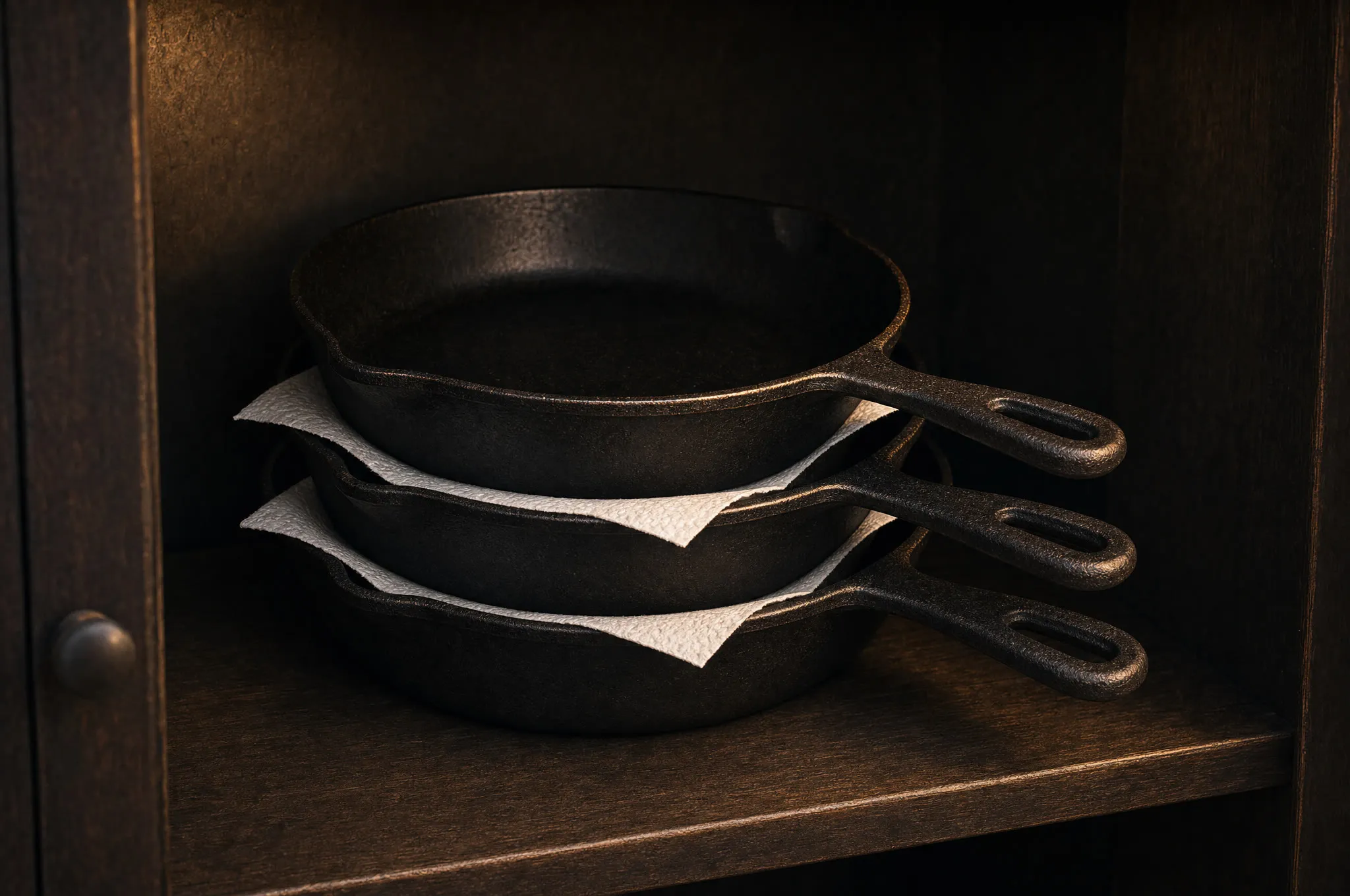
Cast iron stores well when it goes away bone dry, wearing a thin coat of oil buffed until it looks dry, with air moving around it. Dry the pan on a burner — not just with a towel — wipe in a few drops of oil, buff it, and park it somewhere dry with airflow. No sealed lids, no damp cabinets, no stacking wet pans.
That’s the whole system. Everything below is how to run it in a real kitchen: stacks, lids, dutch ovens, humid summers, and the pan you won’t touch again until November.
The 60-second put-away
This is the routine between “done washing” and “in the cabinet.” Same three moves every time, and it’s the difference between a pan that holds its seasoning for years and one that surprises you with orange freckles.
- Dry it on a burner. Towel-dry first, then set the pan over medium heat for two or three minutes until every trace of water has cooked off. A towel gets the water you can see; the burner gets the film you can’t. This is the number-one rule of storage — nothing else on this page matters if the pan goes away damp.
- Wipe in a little oil. A few drops of a neutral oil — grapeseed, canola, whatever’s open — spread over the cooking surface with a paper towel while the pan is still warm. Warm iron takes a thinner, more even film than cold iron. Get the rim and the outside walls too; they rust just as happily.
- Buff it until it looks dry. Take a fresh towel and wipe like you’re trying to take all the oil back off. What survives is the right amount. A pan that looks greasy going into the cabinet comes out sticky, or smelling faintly of old fryer oil.
Where to put it
| Spot | Verdict |
|---|---|
| Hanging on a wall rack or rail | Best. Air on every surface, zero stacking wear |
| Dry cabinet or open shelf | Good — the standard home for most pans |
| Inside the oven | Fine. Dry and out of the way; just remember it before you preheat |
| Under the sink | No. Dampest cabinet in the kitchen |
| Sealed plastic bag or airtight tote | No. Trapped air means trapped moisture |
Hanging is the gold standard if you have the wall for it: every surface gets airflow, nothing grinds against the cooking face, and the pan you can see is the pan you’ll actually use. A sturdy rail with S-hooks or a pot rack both work — cast iron is heavy, so anchor into studs.
Most kitchens store cast iron in a cabinet, and that’s fine. Pick a dry one. The cabinet under the sink fails the test by design — it shares a box with the drain, the wet sponge, and every small leak the trap will ever have. Be equally suspicious of the cabinet directly over the dishwasher if yours vents steam.
Stacking without wrecking anything
Stacked pans are fine — bare iron resting on bare iron is the problem. Two things go wrong: the base of the top pan grinds against the seasoning of the one below, and any humidity that finds its way between two metal faces has nowhere to go.
A folded paper towel between each pan solves both. It cushions the contact and wicks up moisture before it can sit on the iron. Swap the towels whenever they look tired; they cost nothing.
The lid rule: nothing stored sealed
Never put a pan away with its lid seated. A closed lid turns the pan into a little weather system: the air trapped inside carries moisture, the kitchen cools overnight, condensation forms on the iron — and the lid holds it there for weeks. Store lids ajar, or store them somewhere else entirely.
Dutch ovens get the same rule with one adjustment, since their lids usually live with them: fold a paper towel into a thick pad and lay it across the rim, then rest the lid on top. The pad props the lid open a crack and wicks whatever moisture turns up. The gap does the breathing; the towel does the drying.
Humid kitchens
Humidity moves the difficulty slider. If you live somewhere the summer air feels like a warm washcloth — the Texas Gulf coast comes to mind — the room itself will find any bare patch of iron eventually. Nothing about the routine changes; the margins just get thinner:
- The oil wipe stops being optional. In a dry climate a bone-dry pan can sometimes skate by unoiled. In a humid one it can’t.
- Airflow earns its keep. Hanging and open shelving beat closed cabinets; sealed containers go from bad idea to guaranteed problem.
- Check the pans you don’t use. The campfire skillet and the spare griddle deserve a glance and a fresh oil wipe every month or two, because nobody notices rust forming on a pan nobody touches.
Storing a pan for months
A pan headed into deep storage — a move, a seasonal cabin, the doubles you’re not using — gets a heavier version of the same treatment. Two honest options:
- A heavier oil coat. Wipe on more oil than usual, an actually-visible film, and accept the trade: when the pan comes back out, that surface oil will probably have gone rancid. That’s a smell, not damage. Wash it well, dry it on the burner, wipe in fresh oil, cook.
- A wax-paper wrap. Do the normal thin-oil routine, then wrap the pan in wax paper or butcher paper. Paper breathes while keeping dust off the pan and oil off whatever the pan touches. Plastic wrap and zip-top bags do the opposite — they’re the sealed-lid problem in bag form.
Either way, store it somewhere temperature-stable. A closet inside the house beats a garage or storage unit, where every cold night condenses moisture onto the metal.
If it came out rusty anyway
Rust after storage isn’t a mystery — it’s a message. Moisture sat on iron that didn’t have enough seasoning to protect it. Light orange speckling, the same pattern pans show after a trip through the dishwasher, scrubs off in minutes; heavier crusts call for the full rust-removal process. Once you’re back to clean metal, re-season in the oven — thin coats, hot oven — and then fix whatever let the water in, or the rust comes back on the same schedule.
The don’t list
- Don’t nest wet pans. Stacking pans that are “mostly dry” traps water between two faces of metal. This is the fastest route to rust in this whole article.
- Don’t seal cast iron in plastic. Bags, cling wrap, airtight totes — anything that stops air also stops moisture from leaving.
- Don’t store food residue. Grease and crumbs go rancid, hold moisture against the surface, and invite pests. Wash the pan — soap is fine — and run the put-away.
Storage is the passive half of cast iron care: sixty seconds of drying, wiping, and buffing buys you months of the pan just sitting there, staying exactly as good as you left it.
FAQ
Should I oil my cast iron before storing it?
Yes — a few drops of neutral oil wiped over the whole pan, then buffed with a dry towel until the surface looks dry again. That thin film blocks moisture without going sticky or rancid. A visibly greasy coat is only for months-long storage, and you should expect to wash a stale film off afterward.
Can I store a cast iron pan in the oven?
Yes. The oven is dry, gets regular airflow, and keeps the pan out of the cabinet shuffle. The only cost is remembering it's in there before you preheat — the heat won't hurt the pan at all, but grabbing the handle without a mitt will hurt you.
Why did my cast iron rust in the cabinet?
Moisture reached iron that didn't have enough seasoning over it. Usual suspects: the pan went in damp, a lid was seated on it and trapped condensation, or the cabinet itself is damp — under the sink is the classic offender. Scrub the rust off, re-season, and change whichever of those let the water in.
Is it OK to stack other cookware on top of cast iron?
Yes, with a barrier. A folded paper towel or a felt pan protector between pans keeps the pan above from grinding the seasoning below, and wicks away any moisture trapped between the metal faces. Bare metal stacked on bare metal is how stored pans pick up scratches and mystery rust rings.