Care 6 min read
New Cast Iron Pan, First Use: What Pre-Seasoned Actually Gets You
Pre-seasoned means the factory baked on a starter coat, not a finished surface. How to prep a new pan, what to cook first, and what's normal in week one.
This guide has product links. As an Amazon Associate, Seasoned Cast earns from qualifying purchases — it never changes what we recommend.
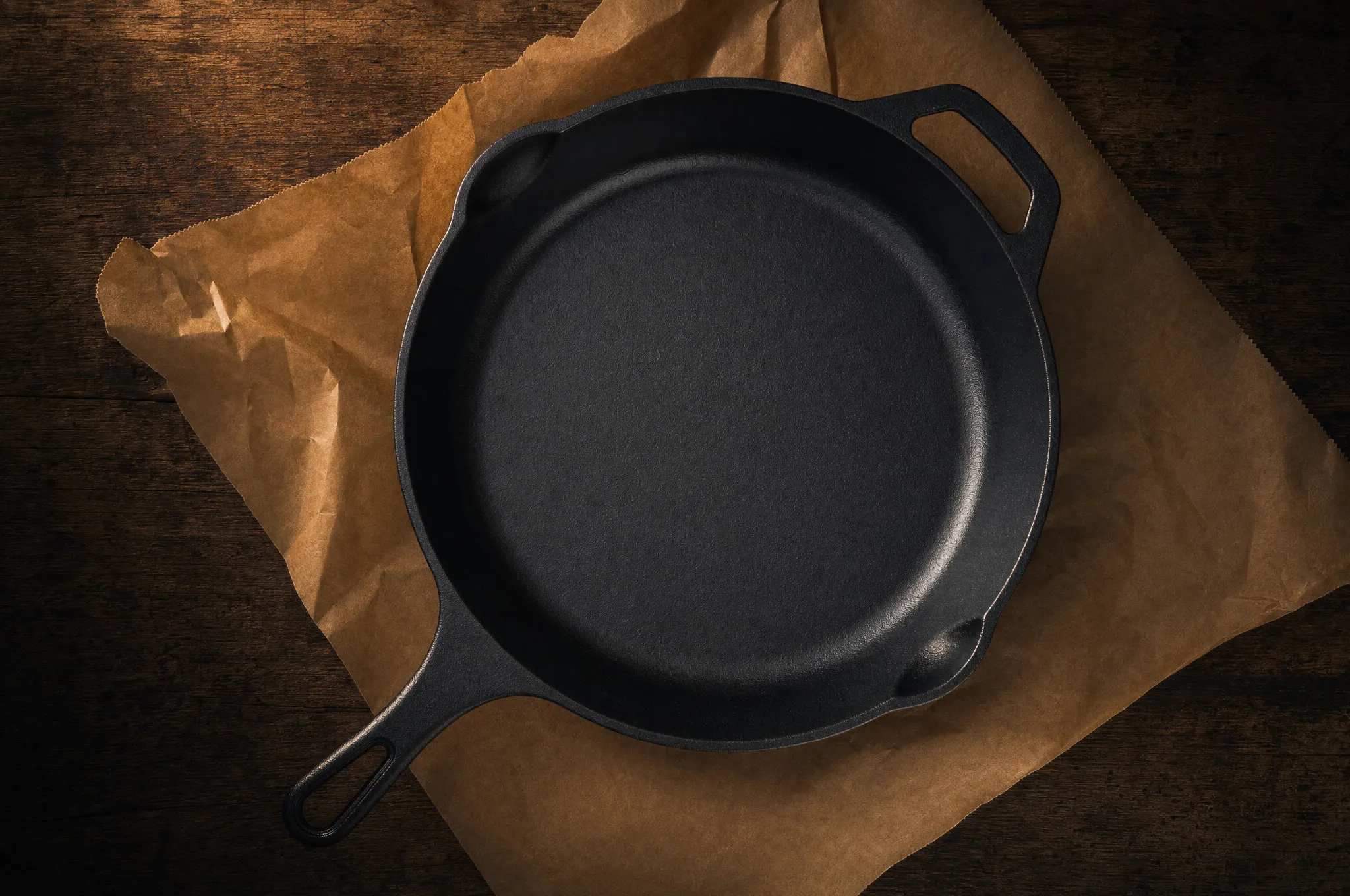
A new pre-seasoned cast iron pan is ready to cook the day you unbox it. Wash it once with warm, soapy water, dry it on a burner, wipe in a thin coat of oil, and cook something fatty. The factory seasoning is real — it’s just thin. Your first few weeks of cooking are what turn it into a finished surface.
That’s the whole onboarding. The rest of this page is what those steps do, what to cook while the pan is young, and which pieces of week-one weirdness are normal. (Spoiler: most of them.)
What “pre-seasoned” actually means
Seasoning is oil baked onto iron until it hardens into a dark, slick, plastic-like film. Pre-seasoned means the foundry ran the first round for you: the bare casting gets a thin coat of vegetable oil and a trip through a very hot oven before it ships. Nearly every new pan sold today comes this way — including everything in our beginner skillet guide.
What it isn’t is finished. The factory coat is a layer or two. The glassy black surface on a ten-year-old pan is hundreds of cooking sessions deep. Think of factory seasoning as a primer coat — it keeps the pan from rusting in the box and gives your first cooks something to build on. Treat it as a starting point and the pan makes sense. Expect nonstick-out-of-the-box and it will disappoint you by Thursday.
Two other things new owners notice. The cooking surface feels pebbly rather than smooth — that’s the texture of the sand mold the pan was cast in, and seasoning fills it in functionally over time. And the color is often a flat gray-black instead of a deep gloss. Both are normal. Slickness and shine arrive with cooking, not in the box.
Out of the box: the ten-minute setup
- Wash it once, with soap. Warm water, a drop of dish soap, an ordinary sponge. You’re rinsing off foundry dust and packaging residue, not scrubbing anything away. Soap is fine on cast iron — modern dish soap won’t touch cured seasoning. Nothing harsher is needed or wanted.
- Dry it on a burner. Towel first, then two or three minutes over medium heat until every trace of water has cooked off. A towel gets the water you can see; the burner gets the film you can’t, and bare-ish new iron rusts faster than you’d think.
- Wipe in a thin coat of oil. A few drops of a neutral oil on a paper towel, spread over every surface — inside, outside, handle, rim. Then buff with a dry towel until the pan looks dry again. What survives the buffing is the right amount.
- Optional: one oven coat. If you want extra runway, give it a single round of oven seasoning — one thin coat, hot oven. It genuinely helps a young pan. One coat. You do not need six.
First cooks: fat first, eggs in week three
The strategy for a young pan is simple — cook things that bring their own fat and don’t mind a little sticking:
- Bacon. The classic first cook for a reason: it renders fat across the whole surface at moderate heat, exactly the treatment young seasoning wants.
- Fried potatoes and hash. Lots of oil, lots of surface contact, very forgiving.
- Smash burgers and sausage. Fatty, high-contact, and nobody inspects them for tearing.
- Cornbread. A well-greased, properly preheated pan, and the crust that forms is the whole point.
- Roasted vegetables with a generous slick of oil, straight into the oven.
Every one of those coats hot iron in fat, which is what seasoning is made of. Two weeks of dinners like these do more for the pan than any amount of ritual.
Hold off on the graduation tests: eggs, delicate fish, anything with a sticky glaze. Those demand a more mature surface, and failing them in week one proves nothing except that the pan is new. Somewhere around week three — call it eight or ten fatty cooks in — try an egg in a puddle of butter. If it drags, give it another week and try again. It’s a layer-counter, not a calendar.
Why food sticks at first (and when it stops)
Young seasoning is thin and slightly porous, so it grips food more than a broken-in surface does. That part only time fixes. But most week-one sticking is technique, and you can fix that tonight:
- Preheat properly. A few minutes over medium before food goes in. Cast iron heats slowly and unevenly; give it time to catch up. A drop of water should sizzle off on contact.
- Use a real amount of fat. A new pan is not the place for a dry sear or a stingy spritz. Fat is doing double duty here — cooking dinner and building surface.
- Let food release itself. Protein sticks until a crust forms, then lets go. If it fights the spatula, it isn’t ready. Thirty more seconds beats a scrape.
The sticking fades as a slope, not a switch. Each fatty cook stacks another whisper-thin layer, and somewhere in the first month you notice the fried egg slid without being asked.
The smell and the black stuff
Two first-cook surprises send new owners straight to a search box, so here are the honest answers.
The metallic, oily smell when the pan first gets hot is the factory coat finishing its cure, plus whatever it picked up in packaging burning off. Normal, harmless, gone within a cook or two. Run the exhaust fan and make bacon.
The black residue — smudges on a paper towel, dark specks on that first batch of potatoes — is seasoning dust: carbon and polymerized oil shed by a young surface that hasn’t consolidated yet. It is not metal shavings, and it won’t hurt anyone. It fades over the first weeks as the layers knit together. Wash the pan as normal and keep cooking. The one exception worth knowing: seasoning coming off in whole flakes or sheets means the coat underneath let go, which is a fixable but different problem.
The week-one don’t list
- No acidic simmers. Tomato sauce, wine reductions, long vinegar braises — acid eats young seasoning and the food picks up a metallic taste as a receipt. A mature pan shrugs off brief acidic contact; a week-old pan doesn’t. Give it a few months first.
- No dishwasher. Not week one, not ever. Detergent and steam strip seasoning down to bare metal.
- No steel wool panic-scrubbing. When something sticks, the answer is hot water, a stiff brush or a scraper, and a warm pan — not abrasives. Steel wool removes the exact layers you’ve been building all week. Save it for genuine rust removal jobs.
- No overnight soaking. Water sitting on iron is how rust starts. Wash it, dry it on the burner, done.
It gets better every month, for years
Here’s the expectation worth setting on day one: this is the worst your pan will ever be. Every skillet dinner from here forward makes it slicker, darker, and more forgiving — for years, not weeks. There’s no maintenance cliff waiting, just the sixty-second routine after each cook: wash (soap’s fine), dry on the burner, wipe in a whisper of oil. That routine and everything around it lives on our cast iron care page.
The factory gave you a primer coat. Bacon does the rest.
FAQ
Do I need to season a pre-seasoned cast iron pan before using it?
No. Wash it with warm soapy water, dry it on a burner, wipe in a thin coat of oil, and cook. The factory seasoning is real seasoning — just thin. One optional round of oven seasoning adds a little margin, but the six-coat marathon some forums prescribe is unnecessary; fatty cooking builds the same layers.
Why does my new cast iron pan smell metallic or oily the first time I heat it?
The factory coat is finishing its cure, and whatever oils it picked up in packaging are burning off. It's normal, it's harmless, and it fades after the first cook or two. Run the exhaust fan, cook something fatty, and it's gone.
Is the black residue coming off my new cast iron pan harmful?
No. Those dark smudges on food or a paper towel are seasoning dust — carbon and polymerized oil from a young surface, not metal shavings. It fades as the seasoning consolidates over the first few weeks. Wash the pan normally and keep cooking. Seasoning lifting in whole flakes or sheets is a different problem with its own fix.
Why does food stick to my new cast iron pan?
Young seasoning is thin and slightly porous, so it grips more than a broken-in surface. Preheat for a few minutes on medium, use a real amount of fat, and let food release on its own before you flip. The sticking fades steadily as fatty cooks stack up layers — most pans feel noticeably slicker within a few weeks.