Buying 7 min read
The Best Cast Iron Skillet for Beginners (Buy the Cheap One)
A plain Lodge is the right first cast iron skillet for nearly everyone. What beginners actually need, what to skip, and what to buy alongside it.
This guide has product links. As an Amazon Associate, Seasoned Cast earns from qualifying purchases — it never changes what we recommend.
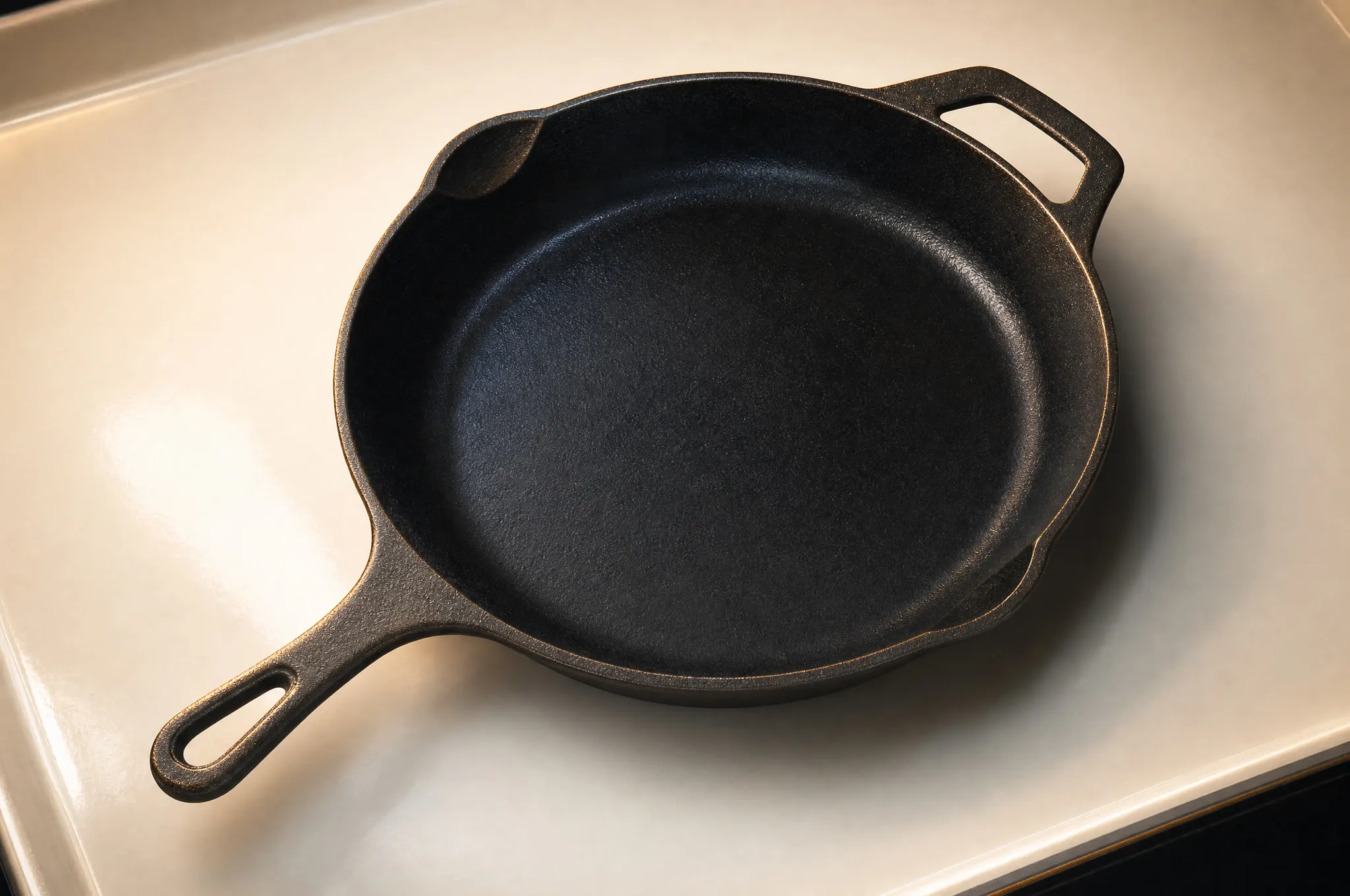
The best first cast iron skillet is a plain Lodge — the 10.25-inch if you mostly cook for one or two, the 12-inch if you feed more. It comes pre-seasoned, it’s close to indestructible, and it costs about what a takeout dinner for two runs. If you wreck it while you learn — and pan number one absorbs every classic mistake — you’re out lunch money, not rent.
That’s the whole verdict, and it hasn’t changed in decades. There are prettier skillets, lighter ones, smoother ones, and we’ll get to all of them. None of them will teach you anything a Lodge won’t, and every one of them raises the stakes on mistakes you haven’t made yet. Buy the cheap one, learn on it, and let your second pan be the interesting one.
What a beginner actually needs from a first pan
Not much, and none of it is exotic. Cast iron is old, simple technology, and the differences between skillets are real but smaller than the marketing suggests. Four things matter on pan number one:
Weight you can live with. Nobody warns you about this properly. A 10.25-inch Lodge weighs around five and a half pounds; the 12-inch is pushing eight. That’s a stack of nonstick pans in one hand, and you’ll be lifting it full, tilting it to baste, and carrying it to the oven. The weight is also the point — all that iron holds heat through a cold steak hitting the surface — but if your wrists have opinions, the smaller size isn’t a compromise. It’s the correct call.
A handle you can hold. Lodge handles are short, straight, and cast as one piece with the pan. The 12-inch adds a helper handle on the far side; use it and lift with two hands, because a loaded 12-inch swung one-handed is how pans get dropped and toes get broken.
Pour spouts. One on each side, so they work left-handed too. You’ll use them every time you drain bacon fat into a jar instead of down the pan wall. Small feature, constant payoff.
Factory seasoning. Every Lodge ships pre-seasoned — a baked-on foundation coat of polymerized oil, not a nonstick miracle. It means the pan is usable the day it arrives and forgiving while you learn the routine that maintains it.
What you don’t need on day one: a machined-smooth cooking surface, a featherweight casting, a brand with a waiting list. Those are real upgrades. They’re just upgrades to preferences you don’t have yet.
The case against starting premium
Smithey and Field Company make some of the best new cast iron being poured — polished cooking surfaces, thinner and lighter castings, the kind of finish work you can feel. We compare them head-to-head in Smithey vs Field Company, and we’d recommend either without hesitation. As a second pan.
As a first pan, a premium skillet is wasted three ways. First, technique dominates: searing temperature, preheating patience, and the post-cook wipe decide how your food comes out, and those live in your hands, not in the casting. A beginner with good habits outcooks an expert pan every time. Second, the first year of cast iron ownership includes at least one mistake — a pan left wet overnight, a scorched patch of seasoning, something acidic simmered too long. On a Lodge, every one of those costs a shrug and a re-season. On a pan that cost a nice dinner out for four, the same mistake stings enough to make the pan precious, and precious pans don’t get used.
Third — and this is the one people skip — you don’t know your preferences yet. After a year of cooking you’ll know whether the weight bothers you, whether you reach for the big pan or the small one, whether the pebbly surface ever actually annoyed you. That’s the information a premium purchase should be built on. A boutique skillet is a reward for learning cast iron, not the tuition.
Vintage iron: the best second pan there is
Old Griswold and Wagner skillets are genuinely special — noticeably lighter than modern Lodge, with cooking surfaces polished glass-smooth at the foundry. A good one will outlive your grandchildren, and hunting them down is half the fun.
It’s the hunting that makes vintage a bad first pan. Estate sales and flea markets don’t come with return policies, and judging old iron is a skill: spotting hairline cracks, checking for warp and wobble, telling honest crust from deep pitting under the rust. That judgment is exactly what a year of cooking on a Lodge builds. When you’re ready, Lodge vs vintage cast iron covers how they actually compare and what to check before money changes hands.
10.25 or 12 inches: pick by who you feed
Lodge casts everything from toy egg pans to two-handed monsters, but the first-skillet decision comes down to two sizes.
| Size | Rough weight | Get it if | The catch |
|---|---|---|---|
| 10.25-inch | around 5½ pounds | you mostly cook for one or two | two chicken thighs fit comfortably; four crowd it |
| 12-inch | close to 8 pounds | you regularly feed three or more | heavy enough that some people quietly stop reaching for it |
The crowding point matters more than it sounds. Cast iron rewards space — a sear needs room around each piece of food, and a packed pan steams instead of browning. So buy for the group you cook for most weeks, not for Thanksgiving. And if you’re torn, take the 10.25: the pan you lift without thinking about it is the pan that gets used, and a too-small pan just means cooking in batches, which is a Tuesday problem, not a crisis.
What to buy alongside it
The pan is half the kit; the other half is what keeps cleanup from ever becoming a chore. This is short on purpose — cast iron needs less gear than any pan you’ve owned.
The scrubber is the one that changes daily life with the pan; we compared the common styles in the chainmail scrubber guide. The oil question has a longer answer in the seasoning oil piece, but the short version is: neutral and high smoke point, nothing fancy. What you don’t need: special soaps, seasoning sprays, or anything sold as a “cast iron care system.” Warm water, ordinary dish soap, and a thin coat of oil are the entire system.
The first fifteen minutes
A new Lodge goes from box to dinner in four steps. Wash it with warm, soapy water — yes, soap is fine; the factory seasoning is baked-on polymer, not a grease film. Dry it completely, ideally with a minute or two on a warm burner, because towel-dry is never all the way dry. Wipe on a coat of neutral oil so thin the pan looks dry again. Then cook something fatty — bacon, sausage, smash burgers — for the first few meals, and save the fried eggs and tomato sauce for a month in. The full walkthrough, including why the first cook matters more than any oven ritual, is in what to do with a pre-seasoned pan first.
Down the road, when the surface goes patchy or dull — and after a rough year of learning, it might — an oven re-season resets the pan to better than new. That’s the safety net under this whole recommendation: there is no mistake a beginner can make that an afternoon and a hot oven won’t undo.
The bottom line
Buy the plain Lodge in the size that matches your table, plus a chainmail scrubber and a bottle of neutral oil. Cook everything in it for a year. Somewhere in that year the weight will stop registering, the surface will go dark and slick, and you’ll develop actual opinions about what pan number two should be — smooth vintage iron from an estate sale, a polished boutique pan, a second size of Lodge. That purchase will be a want instead of a guess, and the rest of the buying guides will be waiting when you get there.
FAQ
Is a Lodge skillet actually good, or just cheap?
Actually good. It's the same metal as the boutique pans — the difference is the factory finish. A Lodge cooking surface comes out of the mold pebbly, where premium pans get machined smooth and vintage pans were polished at the foundry. That texture smooths out over months of cooking, and the food never notices either way. What you're skipping at the low price is finish and weight savings, not cooking ability.
Should my first skillet be 10.25 or 12 inches?
Buy for the number of people you cook for most weeks. One or two people: the 10.25-inch, which is lighter and easier to live with. Three or more: the 12-inch, because a crowded skillet steams food instead of searing it. If you're genuinely torn, take the smaller one — the pan you lift without sighing is the pan that gets used.
Do I need to season a new Lodge before cooking on it?
No. Lodge ships every pan with a baked-on factory seasoning, so it's ready the day it arrives. Wash it with warm soapy water, dry it completely, wipe on a whisper of neutral oil, and cook something fatty for the first few meals. The factory coat is a foundation, not a finished surface — your cooking builds the rest.
Is enameled cast iron easier for a beginner?
Easier to care for, yes — there's no seasoning to maintain and acidic sauces don't faze it. But an enameled skillet costs several times more, the coating can chip, and it never builds the slick cooked-in surface that makes bare cast iron worth owning. Enamel earns its keep in Dutch ovens. For a first skillet, bare iron teaches you more and risks less money.