Buying 7 min read
Lodge vs. Vintage Cast Iron: The Smoothness Debate, Honestly
Vintage Griswold and Wagner skillets are glass-smooth; a new Lodge is pebbly. Why the difference exists, how much it really matters, and which pan to buy.
This guide has product links. As an Amazon Associate, Seasoned Cast earns from qualifying purchases — it never changes what we recommend.
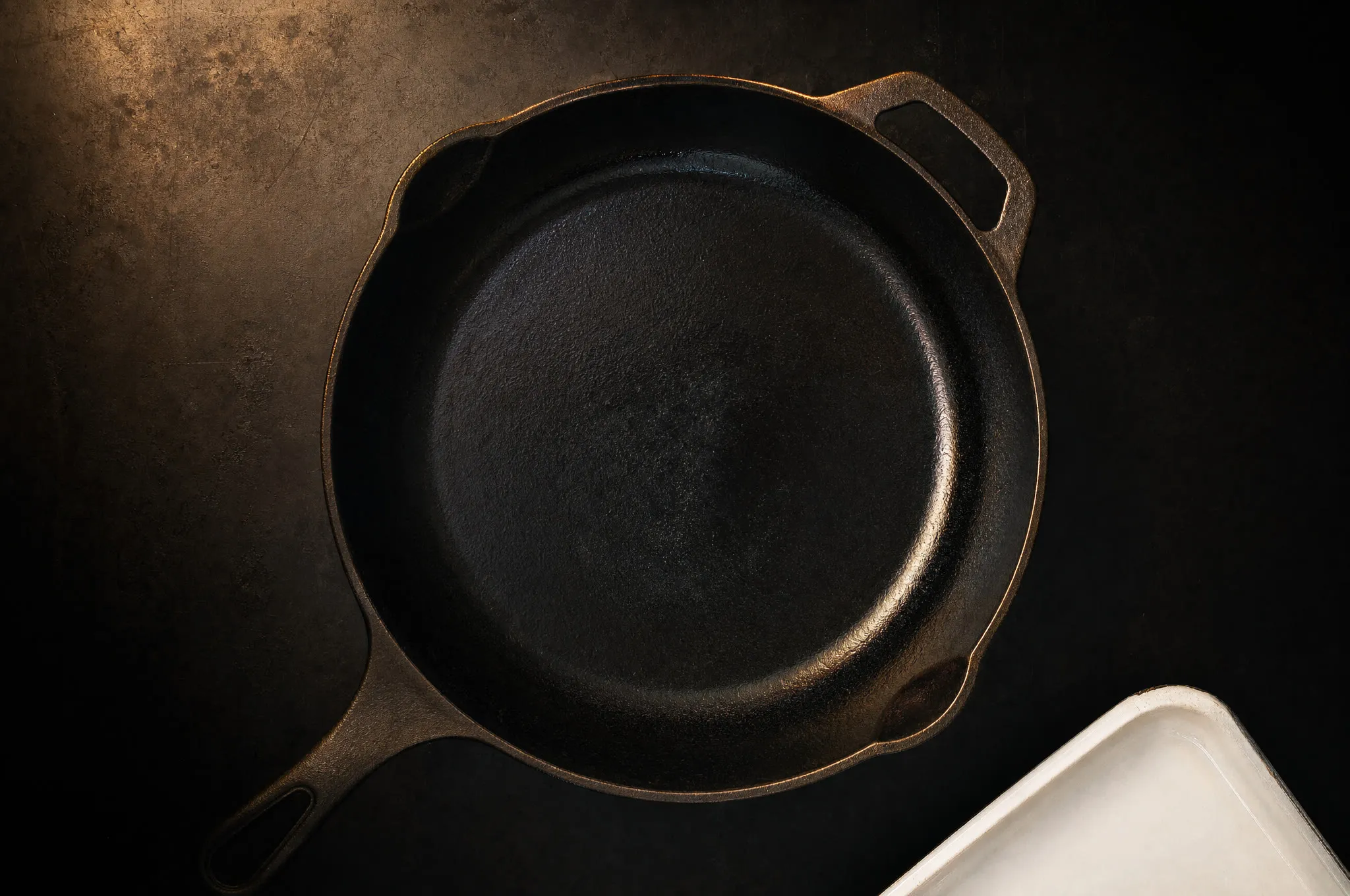
A vintage Griswold or Wagner is glass-smooth because old foundries machined the cooking surface after casting — a step dropped roughly mid-century to cut cost, which is why a new Lodge feels pebbly. The gap matters less than the internet insists: seasoning fills texture with use. Buy the Lodge to cook tonight; hunt vintage as the upgrade.
That’s the short version. Here’s the honest long one, including the parts the smoothness evangelists leave out.
Why old pans are smooth and new ones are pebbly
Every cast iron pan ever made came out of a sand mold, and iron takes the mold’s texture the way plaster takes a fingerprint. Fresh from the sand, every pan in history was pebbly — including the vintage ones.
The difference is what happened next. The old foundries — Griswold, Wagner, and dozens nobody remembers — machined the cooking face after casting: ground and polished it until the sand texture was gone and the surface shone like a worn coin. It took skilled hands, dedicated machines, and real money per pan. For decades, that was simply what finishing meant.
Roughly mid-century, the step died. The storied names consolidated and faded, cookware turned into a volume business, and nonstick arrived to undercut everything. Machining was the obvious line to cut: skip it and the pan still works, still lasts forever, and costs much less to make. Modern production pours the pan, cleans it up, sprays on a thin factory seasoning, and ships it. The pebbly face isn’t sloppiness — it’s most of the reason a new Lodge costs takeout money, and the texture gives that sprayed-on seasoning something to grip.
So the honest history: vintage pans aren’t smooth because the old makers cared more. They’re smooth because a finishing step existed, and it stopped paying for itself.
The two pans at a glance
| New Lodge | Vintage (Griswold/Wagner era) | |
|---|---|---|
| Cooking surface | Pebbly as-cast texture | Machined glass-smooth |
| Weight | Heavy — thick modern casting | Noticeably lighter, thinner walls |
| Heat behavior | Slow to heat, holds hard | Heats faster, dips a little more |
| Eggs, day one | Wants patience and fat | Slick almost immediately |
| Searing | Excellent | Excellent — no difference |
| Availability | Every store, right now | You hunt: estate sales, flea markets, attics |
| Price character | Cheap, fixed, predictable | Often less than new if you hunt; collector names cost more |
| Risk | Basically none | Cracks, warp, pitting — inspect before paying |
How much smoothness actually matters
Less than the internet says, and the internet says a lot.
Here’s the part the debate skips: food never touches iron. It touches seasoning — the layers of polymerized oil laid down every time you cook and every time you run the oven process. Seasoning fills valleys. On a pebbly Lodge, every cook rounds the texture over a little more, and after a year or two of regular use the surface feels closer to satin than gravel. Vintage pans didn’t skip that process; they’ve just had a long head start on top of a smooth beginning.
Where smoothness genuinely helps: eggs, crepes, anything delicate — especially in a pan’s first months. A machined face with modest seasoning is slick almost immediately; a new Lodge wants more patience, more fat, and a proper preheat to do the same job. If your cast iron dream is a no-drama over-easy egg on day one, vintage really is better. That part isn’t folklore.
Where smoothness doesn’t matter at all: searing, frying, braising, baking. A steak crust cares about heat and a dry surface, not texture. Fried chicken cares about oil temperature. Cornbread cares about a screaming preheat. That’s most of what cast iron is for, and a pebbly pan does all of it flawlessly on day one.
And the sanding question, since it always comes up: yes, you can take sandpaper or an orbital sander to a new Lodge, smooth the face, re-season from bare metal, and buy yourself a shortcut to vintage feel. It works. It also costs you an afternoon, strips the factory seasoning you paid for, and produces a result the pan would have reached on its own through cooking. We’d rather spend the afternoon frying chicken — but it’s your pan, and sanding isn’t wrong. It’s just optional.
Weight: the difference you feel before you cook
Smoothness gets the headlines; weight is what your hands notice first. Vintage skillets were cast thin — thinner walls, thinner floors — and a Griswold-era pan is noticeably lighter than its modern equivalent. Pouring pan sauce one-handed, sliding an omelet, carrying a full skillet to the table: on a vintage pan those are ordinary motions, not commitments. If your wrists have opinions, this alone justifies the hunt.
There’s an honest trade hiding in it. Thin iron holds less heat: a vintage pan preheats faster and follows the burner more willingly, but it dips a little more when a cold steak lands. A thick modern Lodge is the heavier lift and the steadier sear — mass is ballast. Neither tuning wins outright; they’re the same instrument strung two ways.
Where vintage pans hide
Not in stores, mostly. Estate sales, flea markets, junk shops, barn sales — and family attics, which out-produce all of them. Ask your relatives before you spend a dime; the best vintage skillet is the one with your grandmother’s fried chicken already in its history.
Nobody warns you about the other part: the hunt is the fun. Checking the underside of every crusty pan in a junk booth, learning the logos, spotting a smooth face under years of grime and knowing what it is when the seller doesn’t — vintage cast iron is a hobby that occasionally produces cookware.
Two identification basics to start with. Flip the pan over: a rough scar across the bottom is a gate mark, and it means the pan is genuinely antique. And learn the maker logos — we’re building out full identification guides, starting with Griswold, because logo, size number, and handle shape are how you tell a great pan from a merely old one.
What to check before you pay
An old pan earns its price only if it’s sound. Three checks, one minute, no tools:
Cracks. Look hard around the handle base and the sidewalls, then tap the rim with a knuckle — sound iron rings, cracked iron thuds. Hairlines hide under grime and rust, and they only ever grow.
Warp. Set the pan on a flat counter and press opposite sides of the rim. Rocking or spinning means a warped base — a real problem on glass and induction, an annoyance everywhere else. Minor warp is sometimes fixable, but when there are other pans in the booth, flat wins.
Pitting. Surface rust means nothing — it scrubs off, and the pan re-seasons like it never happened. What matters is what’s underneath: deep pits across the cooking floor — craters that catch a fingernail — never stop grabbing food. Pits on the walls or the outside are cosmetic. On the cooking floor, they’re the dealbreaker.
The verdict
Buy the Lodge tonight. It’s cheap, it’s in stock, it asks for nothing but cooking, and every knock against it fades with use — the texture rounds over, the seasoning deepens, and the weight becomes familiar. Our beginner skillet guide covers which size to grab.
Then let vintage happen to you. Learn the logos, check the family attic, flip over every sad skillet at every estate sale — and when a light, glass-smooth survivor finally turns up for less than you paid for the Lodge, you’ll understand why people get strange about this. In a two-skillet kitchen the roles sort themselves: the Lodge takes the campfire, the fried chicken, and the abuse; the vintage pan takes the eggs and the pride of place.
That’s the honest resolution to the smoothness debate: it’s not Lodge versus vintage. It’s Lodge first, vintage eventually, and no regrets in either direction. More decisions like this live in the buying guides.
FAQ
Why is vintage cast iron so smooth?
Old foundries machined the cooking surface after casting — they ground and polished the sand texture away as a standard finishing step. That step was dropped roughly mid-century as cookware became a volume business, so modern pans like Lodge ship with the pebbly as-cast surface and a sprayed-on factory seasoning instead.
Does a smoother surface actually cook better?
For delicate food, somewhat — eggs and crepes release more easily from a machined face, especially in a pan's first months. For searing, frying, braising, and baking, texture makes no practical difference. And seasoning narrows the gap with use: a Lodge cooked on regularly for a year or two feels closer to satin than gravel.
Is Lodge lower quality than Griswold or Wagner?
No — it's the same gray iron, cast thicker and finished cheaper. The old makers machined the surface smooth and cast thin; Lodge skips the machining and casts heavy, which is why it costs takeout money and shrugs off abuse. The pebbly surface is a different bargain, not a defect.
Should I just sand my Lodge smooth?
You can — sand the cooking face, re-season from bare metal, and you get a shortcut to vintage feel. It genuinely works. It's also optional: cooking does the same smoothing slower and builds seasoning while it happens. Sand because the project appeals to you, not because the pan needs it.